
Benefits of using electronic signatures for transforming business agreements


Electronic signatures have revolutionized the way businesses handle agreements, making the process faster, more secure, and highly efficient. By adopting electronic signature platforms like SignNow, companies can streamline workflows and eliminate the need for physical paperwork.
- Replacing wet signatures with electronic signatures reduces operational costs, speeds up the signing process, and minimizes paper waste.
- A strong digital transformation strategy uses detailed audit trails and authentication measures to ensure legal validity.
- Businesses save time by automating repetitive tasks and streamlining approval workflows across different departments.
- SignNow provides an intuitive platform to collect signatures, manage electronic documents, and seamlessly integrate into your existing workflows.
- Secure electronic signature solutions support remote collaboration while keeping important documents protected and legally binding.
Business agreements form the backbone of commercial operations. However, manual handling of paper documents often slows down operations and introduces unnecessary delays. When you upgrade your signing process to a digital format, you remove the bottlenecks associated with physical transportation and physical storage.
We created this guide to explain the benefits and features of electronic signature technology. You will learn how to implement these tools, improve your customer experience, and secure your document’s integrity. Upgrading from traditional paper-based processes to a modern system helps your team focus on high-value work instead of chasing down approvals.
What is the purpose of the electronic signature?
The primary purpose of an electronic signature is to capture consent or approval on electronic documents in a legally recognized format. Unlike handwritten signatures that require physical presence, electronic signatures speed up execution by allowing parties to sign from any internet-connected device. This technology links the signer’s identity directly to the document’s content.
Organizations use electronic signature software to build trust and accountability into their agreements. Modern platforms capture timestamps, IP addresses, and authentication measures to prove exactly who signed what and when. This creates a clear record that protects all parties involved.
Replacing the traditional pen-and-paper method with electronic devices changes how teams operate. Your business can automatically route contracts, verify document status instantly, and enforce a strict signing order. Ultimately, the purpose is to replace manual tasks with streamlined processes that scale easily.
What are the advantages of signing documents electronically?
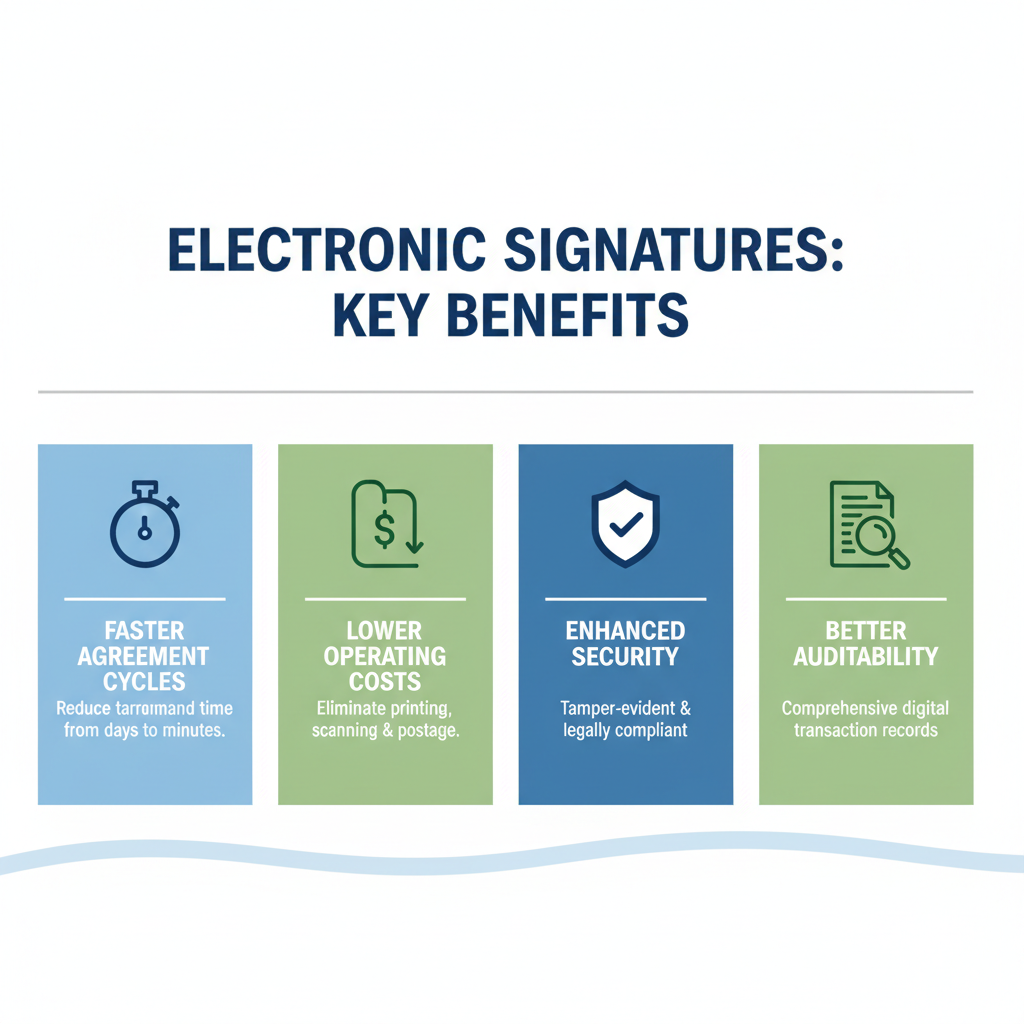
Transitioning away from physical documents provides immediate improvements to your daily operations. First, signing documents electronically creates massive time savings. Instead of printing, mailing, and waiting for couriers, your team can collect signatures in just a few clicks. This speed keeps projects moving and prevents deals from stalling.
Another major advantage is the reduction of repetitive tasks and manual processes. When you use advanced electronic signatures or qualified electronic signatures, the software handles the routing. You no longer need to manually track who has signed or follow up with missing parties. Automated reminders keep the approval process moving forward.
Finally, signing documents electronically delivers significant cost savings. You eliminate printing costs, courier costs, and the need for expansive physical storage. Reducing paper usage also decreases your company’s carbon footprint and greenhouse gas emissions. Fewer paper documents mean less paper waste and lower overall paper consumption.
What are the benefits of an electronic signature for businesses?
When asking, “What are the benefits of an electronic signature for businesses?”, the answer spans multiple operational areas. e-Signatures contribute directly to lower operational costs and a better bottom line. Moving to digital documents eliminates the costs associated with manual handling.
The customer experience improves drastically when clients can sign agreements from their mobile devices. Nobody wants to print onboarding forms, sign them, and scan them back. Electronic signature platforms allow clients to finalize non-disclosure agreements and contracts seamlessly. This lack of friction leads to faster onboarding and higher completion rates.
Improved security is a critical benefit for corporate environments. Electronic signature solutions apply detailed audit trails to track every action taken on important documents. If a dispute arises, you can rely on these audit trails to defend the document’s integrity. Enhanced security features prevent unauthorized access and protect sensitive information.
The core benefits and features of electronic signatures
To understand the full impact of this technology, you need to look at specific features. The benefits and features of electronic signature platforms directly address the flaws of legacy systems. Here are the core elements that drive real business value.
Detailed audit trails and document tracking
Every action matters when executing business agreements. A robust platform generates detailed audit trails that record when a document was opened, viewed, and signed. This level of tracking provides a clear view of the document status at all times.
Seamless integration into existing workflows
You do not want to force your team to learn an entirely separate software ecosystem. Strong e-Signature platforms seamlessly integrate with your current tools. SignNow, for instance, connects with popular CRMs and cloud storage solutions. This allows you to generate and send documents electronically without leaving your primary workspace.
Support for multiple signatures and complex routing
Many business agreements require multiple signatures from various stakeholders. Electronic signature software lets you define a specific approval process. You can dictate the exact order in which parties receive the document. This ensures compliance with compliance processes and prevents people from signing out of turn.
Mobile optimization and remote collaboration
Modern business happens on the go. An effective electronic signature provides robust mobile support, enabling users to sign from mobile devices effortlessly. This flexibility enhances remote collaboration, ensuring that field workers, traveling executives, and remote clients can execute agreements without delay.
How to use SignNow for secure electronic signatures
SignNow simplifies the transition from manual processes to secure digital signing. The platform prioritizes user experience while maintaining strict compliance with global standards.
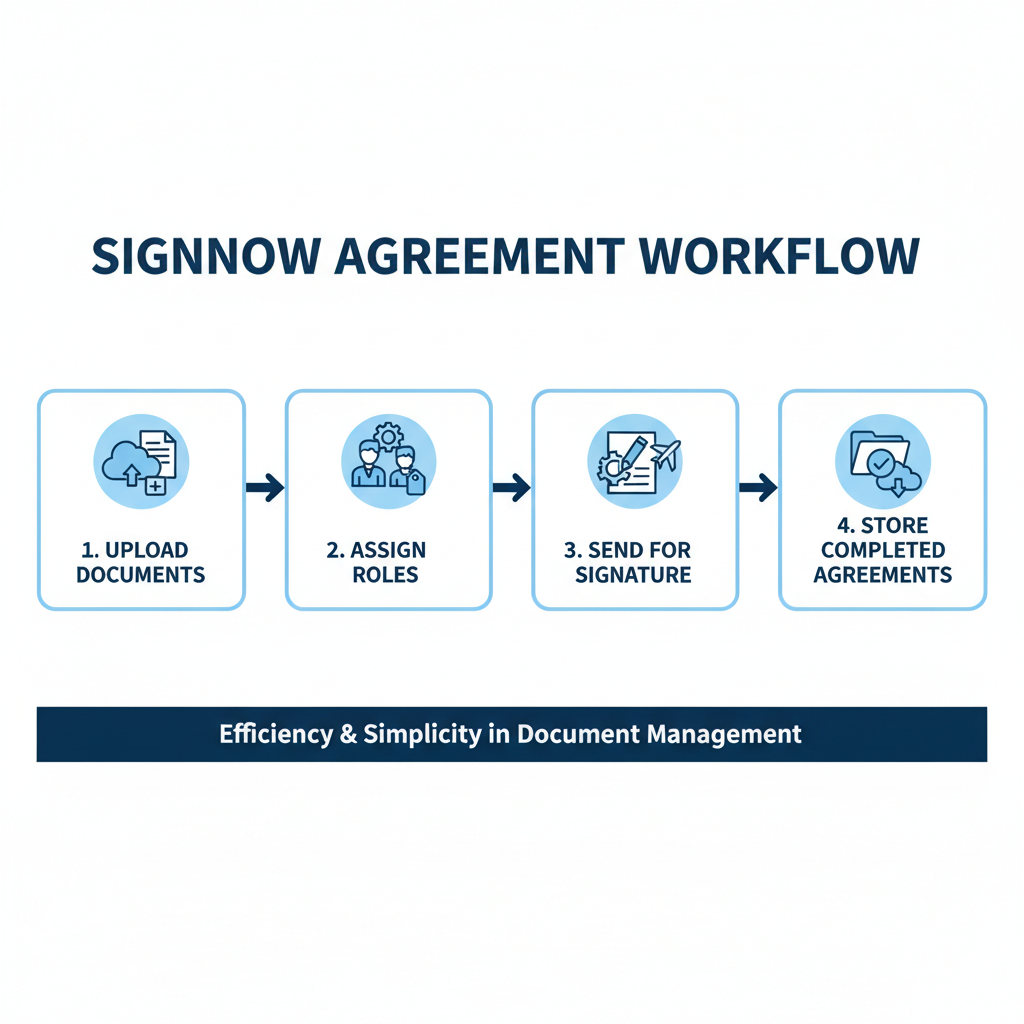
Here is how you can transform your agreement workflows using SignNow.
- Upload documents or create templates: Start by uploading your business agreements or creating reusable templates for routine documents like NDAs or HR forms. You can then add fillable fields for dates, text, and signatures.
- Assign roles and send for signing: Route the document by assigning roles to each party. You can send it via email or a signing link. To ensure only the intended recipient can access the file, SignNow protects the signer’s identity with two-factor authentication or password protection.
- Store and access your documents: Once signed, the platform automatically saves the executed files along with their audit trails. Your team can securely access these documents anytime. With unlimited users, you can easily scale this secure signing process across your entire organization.
Comparing paper-based processes vs. digital signing
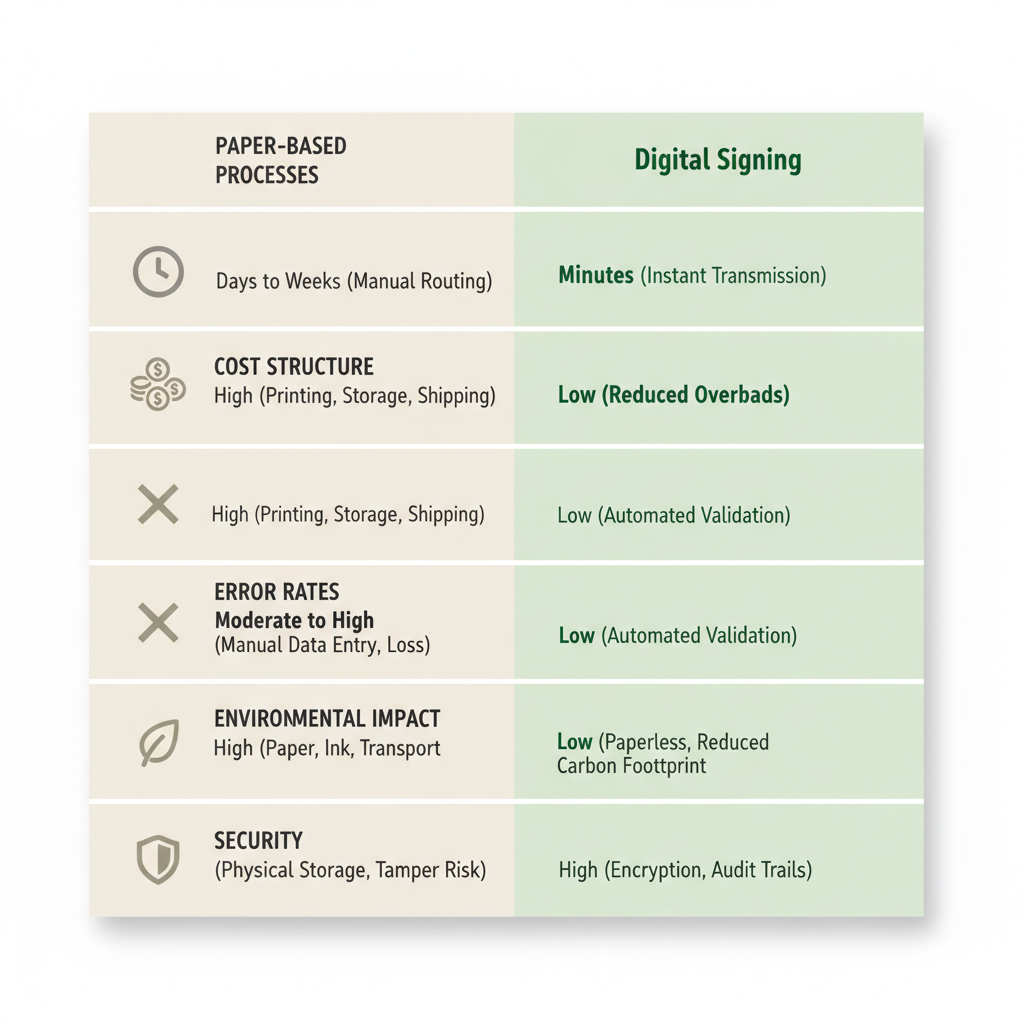
Understanding the shift requires a direct look at how traditional methods stack up against digital transformation.
- Execution speed: Paper workflows take days or weeks due to physical transportation. Digital signing takes minutes using an internet-connected device.
- Cost structure: Wet signatures involve printing costs, courier fees, and physical storage expenses. e-Signature solutions require a predictable software subscription, leading to massive cost savings.
- Error rates: Manual handling leads to missed signatures and lost pages. Digital platforms enforce required fields, reducing errors.
- Environmental impact: Paper consumption drives up paper waste and greenhouse gas emissions. Reducing paper use by using electronic documents lowers your carbon footprint.
- Security and tracking: Physical files can be misplaced or altered without notice. Electronic devices leverage detailed audit trails and cryptography to ensure document integrity.
Ensuring legal validity and legal standing
Many organizations worry about the legal validity of electronic signatures. In the United States, the Uniform Electronic Transactions Act (UETA) and the ESIGN Act establish that electronic signatures carry the same legal standing as handwritten signatures. An agreement cannot be denied enforceability simply because it is in an electronic format.
To maintain this legal standing, your chosen software must provide specific safeguards. The system must demonstrate a clear intent to sign and securely link the signature to the specific document. It must also retain the record in a way that allows all parties involved to reproduce it accurately.
SignNow complies with stringent industry regulations, including SOC 2 Type II, HIPAA, and FDA 21 CFR Part 11. These compliance processes ensure that your documents remain legally binding and fully admissible. By relying on established authentication measures, you protect your organization from compliance risks.
Disclaimer: The information contained in this blog post is provided for general informational purposes only and does not constitute formal legal advice.
Final thoughts
Adopting electronic signatures transforms how your business manages agreements, removes friction from your operations, and dramatically reduces your operational costs. You eliminate the delays caused by physical transportation and secure your documents with comprehensive audit trails. Modern electronic signature platforms provide the legal standing and enhanced security necessary to operate confidently in any industry.
If you want to speed up your signing process, reduce paper waste, and improve your overall customer experience, it is time to upgrade your workflows. SignNow offers an intuitive, scalable, and secure platform to handle all your electronic documents seamlessly. Start your free trial of SignNow today and experience the speed and security of digital signing.
Glossary
- Audit trail: A secure, time-stamped digital record that tracks every action taken on a document. It records when a file is opened, viewed, and signed, providing evidence of the document’s history.
- Uniform Electronic Transactions Act (UETA): A legal framework adopted by most U.S. states that validates the use of electronic records and signatures. It ensures that digital agreements hold the same legal weight as traditional paper contracts.
- Wet signature: A traditional signature made with ink on a physical piece of paper. This method requires the physical presence of the document and is becoming less common due to digital transformation.
- Authentication measures: Security steps used to verify the identity of the person signing a document. These steps often include passwords, SMS verification codes, or multi-factor authentication to prevent fraud.
FAQ
- What are the advantages of signing documents electronically?
Signing documents electronically drastically reduces the time it takes to finalize business agreements. It eliminates the need for printing, mailing, and physical storage, which directly lowers your operational costs. Additionally, digital signing improves security by utilizing detailed audit trails to track document status. - What is the purpose of the electronic signature?
The purpose of the electronic signature is to provide a fast, legally binding way to capture consent on digital documents. It replaces slow manual workflows with automated routing and instant execution. This ensures that contracts and agreements are processed efficiently while maintaining a secure record of the transaction. - What are the benefits of an electronic signature for businesses?
Businesses benefit from faster contract turnaround times and a significant reduction in repetitive tasks. e-Signatures contribute to an improved customer experience by allowing clients to sign from mobile devices anywhere. Furthermore, organizations see immediate cost savings by eliminating paper usage and courier expenses. - Are electronic signatures legally recognized?
Yes, electronic signatures are legally recognized in most jurisdictions around the world. Laws like the ESIGN Act and the Uniform Electronic Transactions Act establish their legal validity in the United States. As long as the platform uses proper authentication and audit trails, these signatures are legally binding. - How do e-Signature platforms improve security?
e-Signature platforms improve security by tracking IP addresses and applying strict authentication measures to verify a signer’s identity. They use cryptography to seal the document, ensuring that no unauthorized changes can be made after signing. This provides stronger evidence and better protection than traditional paper files. - Can I use electronic signatures for multiple parties?
Yes, modern electronic signature software handles multiple signatures with ease. You can set up a specific approval process and determine the exact signing order for all parties involved. The system will automatically route the document to the next person as soon as the previous party completes their section.
- What is the purpose of the electronic signature?
- What are the advantages of signing documents electronically?
- What are the benefits of an electronic signature for businesses?
- The core benefits and features of electronic signatures
- How to use SignNow for secure electronic signatures
- Comparing paper-based processes vs. digital signing
- Ensuring legal validity and legal standing
- Final thoughts
- FAQ
